

With one week left before the end of April, a key development shaping crypto market price action has been the slight decline in short-term confidence and demand, driven by a growing sense of caution surrounding the Middle East conflict, where no clear progress in negotiations has been observed in the short term.
This cautious environment has started to consistently reduce risk appetite, particularly for assets such as cryptocurrencies, and may continue to generate a sense of indecision across major crypto assets in the coming trading sessions.

The Middle East situation drives caution
The week closes with ongoing attempts at negotiation between the United States and Iran, but the conflict remains active in the short term, with continued vessel seizures and sustained pressure in the Strait of Hormuz. While there is no clear escalation, the situation does suggest a pause in negotiations, leaving the market waiting for meaningful updates that could support confidence.
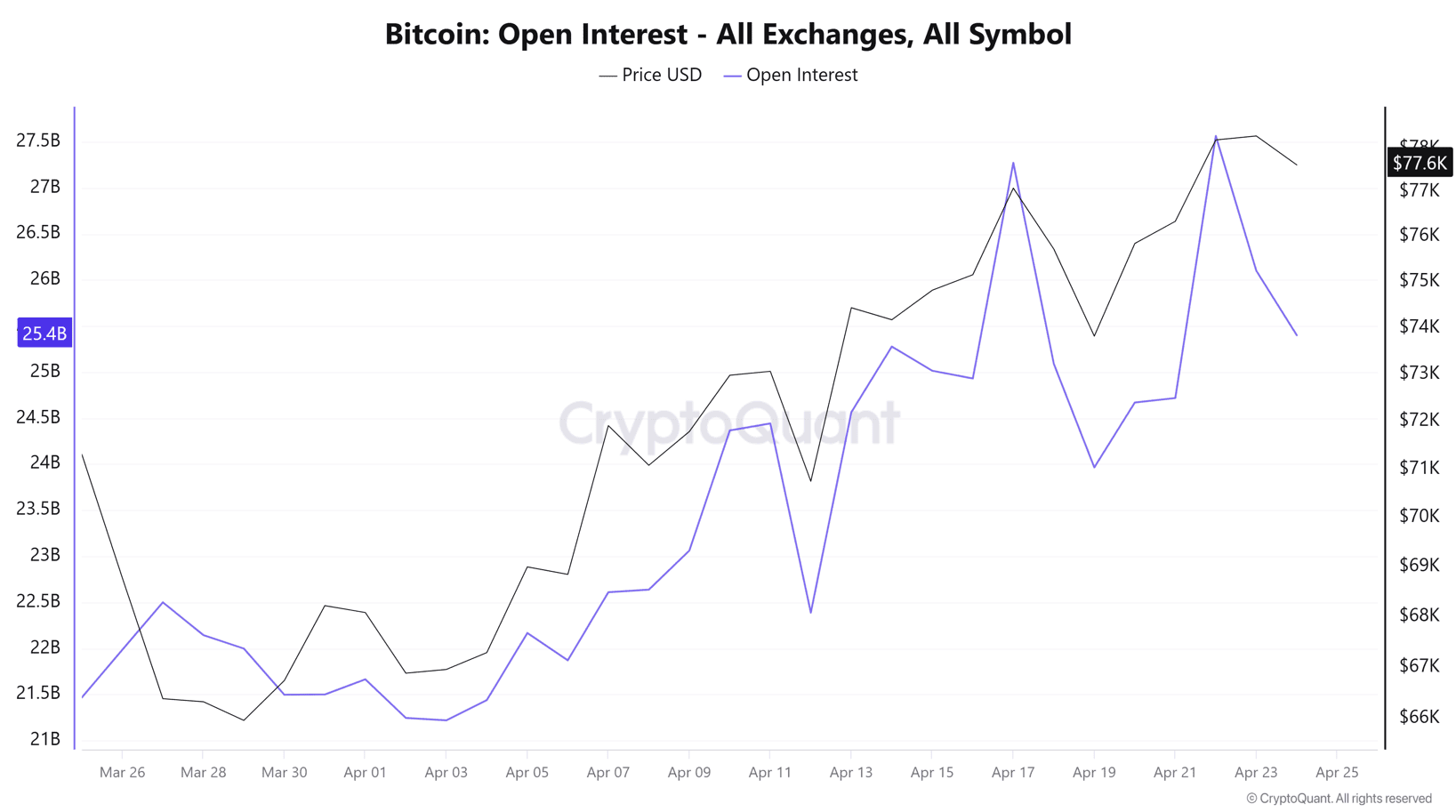
This context has begun to shift the environment seen in previous weeks, when rising confidence was driving demand in risk markets such as crypto. Currently, this caution is reflected in market activity, particularly in metrics such as Bitcoin’s open interest, which measures the total number of open positions across major exchanges.
At present, open interest has been declining steadily since April 22, now standing around $25.4 billion, below levels seen previously. This drop, combined with the recent weakness in BTC price action, suggests a reduction in long positioning and a decline in overall demand activity.
Source: CryptoQuant
This environment is highly relevant, as the caution driven by the conflict appears to be contributing to a sustained slowdown in demand across the crypto market. Unless clear progress in negotiations emerges, indecision is likely to remain a dominant factor in the coming sessions.
Central banks come into focus
Another important factor is the proximity of key monetary policy decisions from major central banks, including the Bank of Japan, the Bank of Canada, the Federal Reserve, and the European Central Bank, among others.
This backdrop could influence crypto market sentiment, as historically, more aggressive monetary policy has reduced the appeal of risk assets. It is possible that expectations surrounding these announcements are contributing to an additional layer of caution in the market.
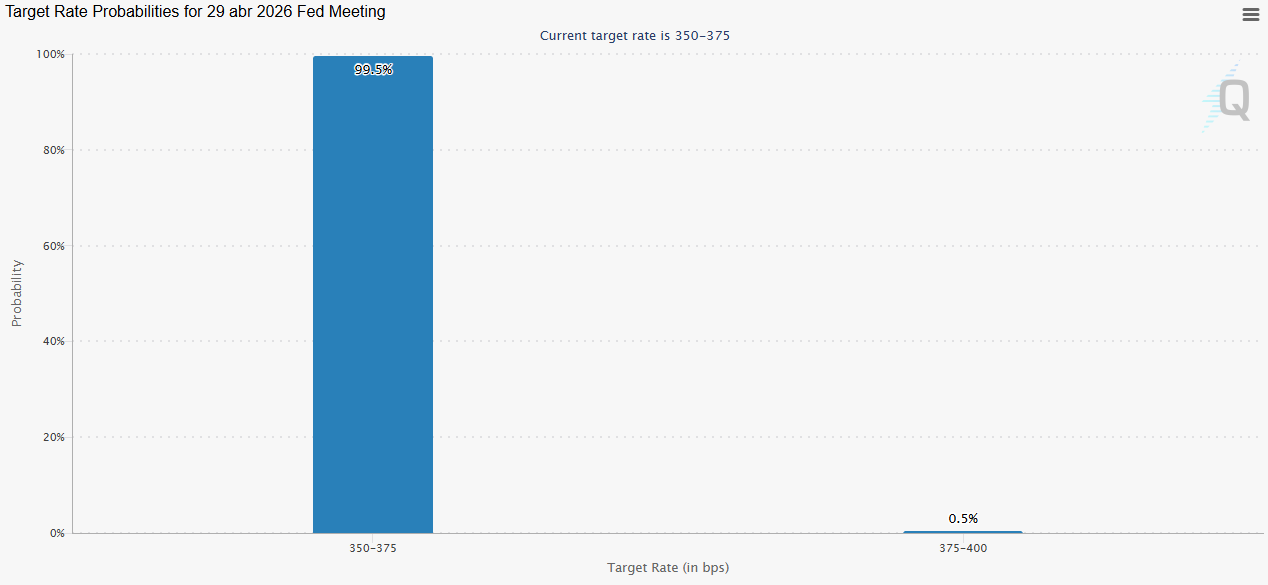
At present, most central banks, including the Federal Reserve, are expected to keep interest rates stable. In the case of the U.S., there is roughly a 99.5% probability that rates will remain unchanged at 3.75%, indicating that this scenario is already fully priced in.
Source: CMEGROUP
However, the key focus will be on post-decision commentary, particularly regarding inflation outlooks. In an environment where rates remain elevated for longer, this could continue to weigh on risk appetite, including cryptocurrencies, potentially reinforcing short-term indecision or even additional weakness.
Bitcoin relative to other markets
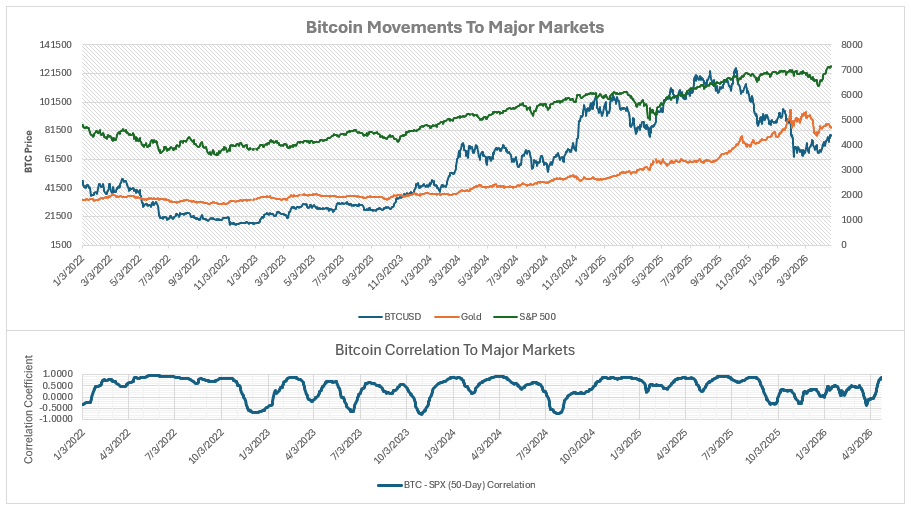
At present, Bitcoin maintains a positive correlation with traditional risk markets such as the S&P 500, with levels above 0.5. This indicates a strong alignment in price movements between crypto and equity markets in the short term. It is important to note that correlation levels can change over time.
Source: Data – TVC, StoneX, Tradingview
This correlation suggests that Bitcoin and the broader crypto market are behaving more like traditional risk assets, reacting to macroeconomic and political factors that influence overall market confidence. This also helps explain why, in the current environment, cryptocurrencies are not being perceived as safe-haven assets.
Overall, this dynamic suggests that as long as markets remain focused on developments in the Middle East and upcoming central bank decisions, demand for cryptocurrencies may remain limited, reinforcing a short-term environment of indecision.
Confidence weakens again
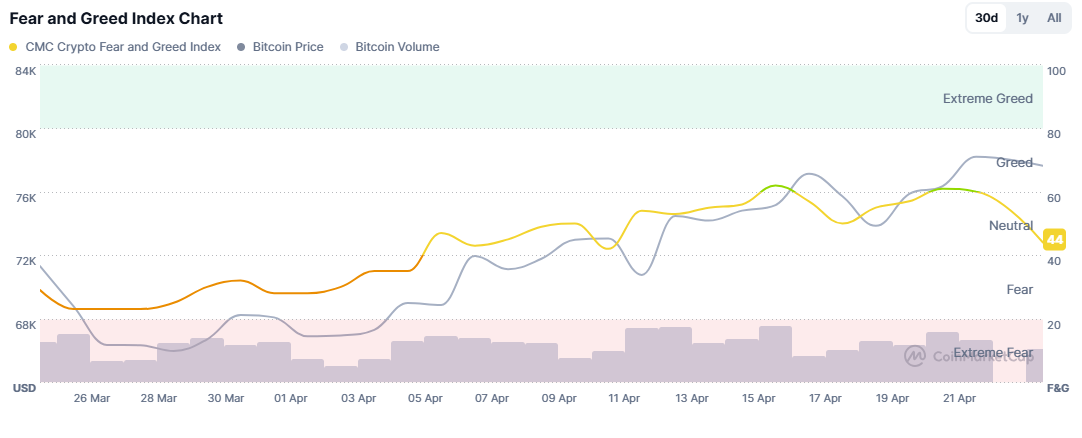
Confidence indicators in the crypto market have started to show a notable decline, with the Fear and Greed Index falling toward the 44 level, moving closer to the “fear” zone over the past week.
Source: Coinmarketcap
This shift reflects that market confidence has not been able to sustain itself in the short term, limiting the conditions needed for a stronger recovery in demand. If this trend continues, the crypto market could remain in a phase of indecision or weakness in the coming sessions.
Written by Julian Pineda, CFA, CMT – Market Analyst
Follow him on: @julianpineda25