
- Traditional drivers have faded in USD/JPY influence
- Yen weakness tied to politics and energy costs
- Fed and BoJ decisions dominate this week’s focus
- Tokyo CPI and fiscal signals add extra risk
- USD/JPY directional risks skewed higher
Summary
USD/JPY has shrugged off traditional drivers like rate spreads and risk sentiment, with correlations to U.S. yields turning mildly negative. Temporary factors such as Japan’s political shift and higher energy costs have added pressure, but the focus now shifts to Fed and BoJ decisions, Tokyo CPI and fiscal signals. U.S. tech earnings could also sway carry trade flows. With price action firm and momentum strong, directional risks for USD/JPY remain skewed to the upside.
Assessing Fundamental Influences
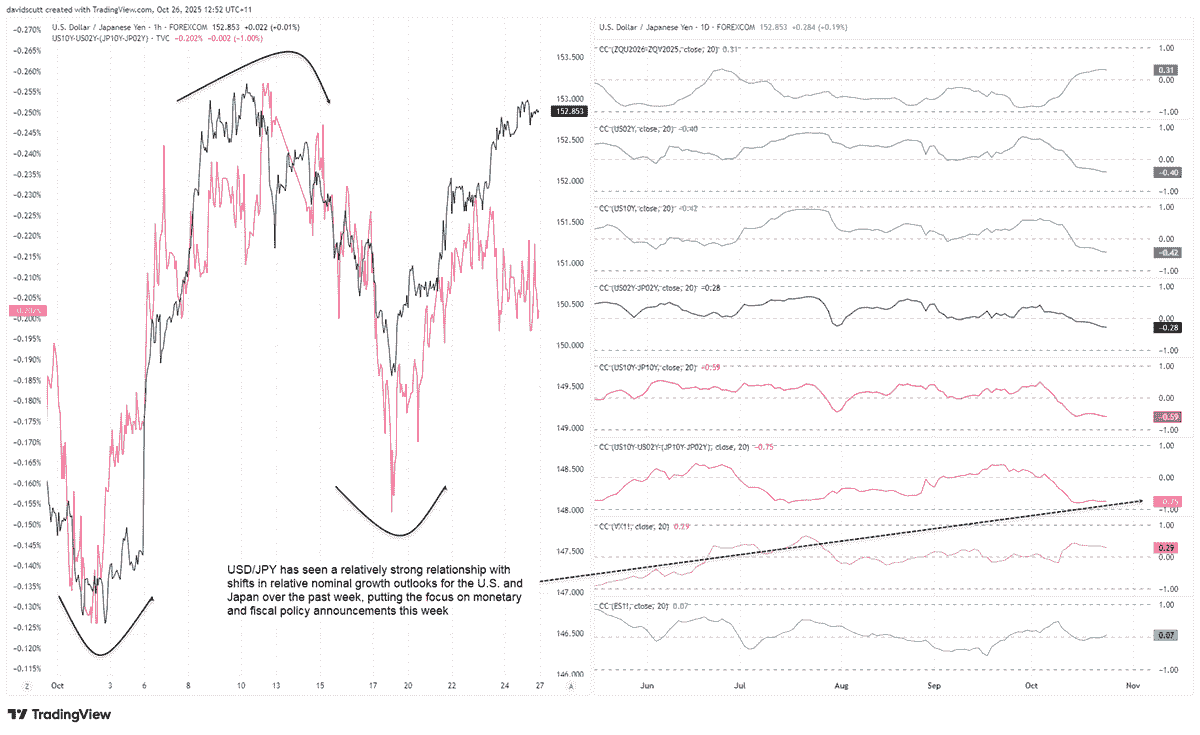
Historic drivers such as interest rate differentials, risk appetite and implied market volatility have shown little to no influence on USD/JPY movements over the past month, as shown by the correlation coefficients in the chart below. Rather than a positive correlation with U.S. yields and yield spreads between the United States and Japan, the relationship has been mildly negative. That suggests other factors are behind the yen’s recent weakness.
Source: TradingView
Sanae Takaichi’s elevation to Japanese PM has been part of the story, with traders betting on more stimulatory fiscal and monetary policy settings than what would otherwise have been the case. Large increases in energy prices late last week may have also contributed to the yen’s slide, reflecting Japan’s status as a significant energy importer. Those influences are likely to prove temporary unless sustained, suggesting interest rates and market sentiment may once again take over as key influences on the yen.
What’s been interesting is USD/JPY’s strengthening inverse relationship with shifts in relative nominal growth expectations in the United States and Japan, as proxied by the 2s10s yield spread between the two nations. It has not been the strongest relationship over the past month, but at 0.75 it suggests the relative growth outlook in both nations may be something to consider for anyone trading USD/JPY. You can see the relationship visually between the two in the left-hand pane in the chart above.
Fed, BoJ Rate Decisions Loom Large
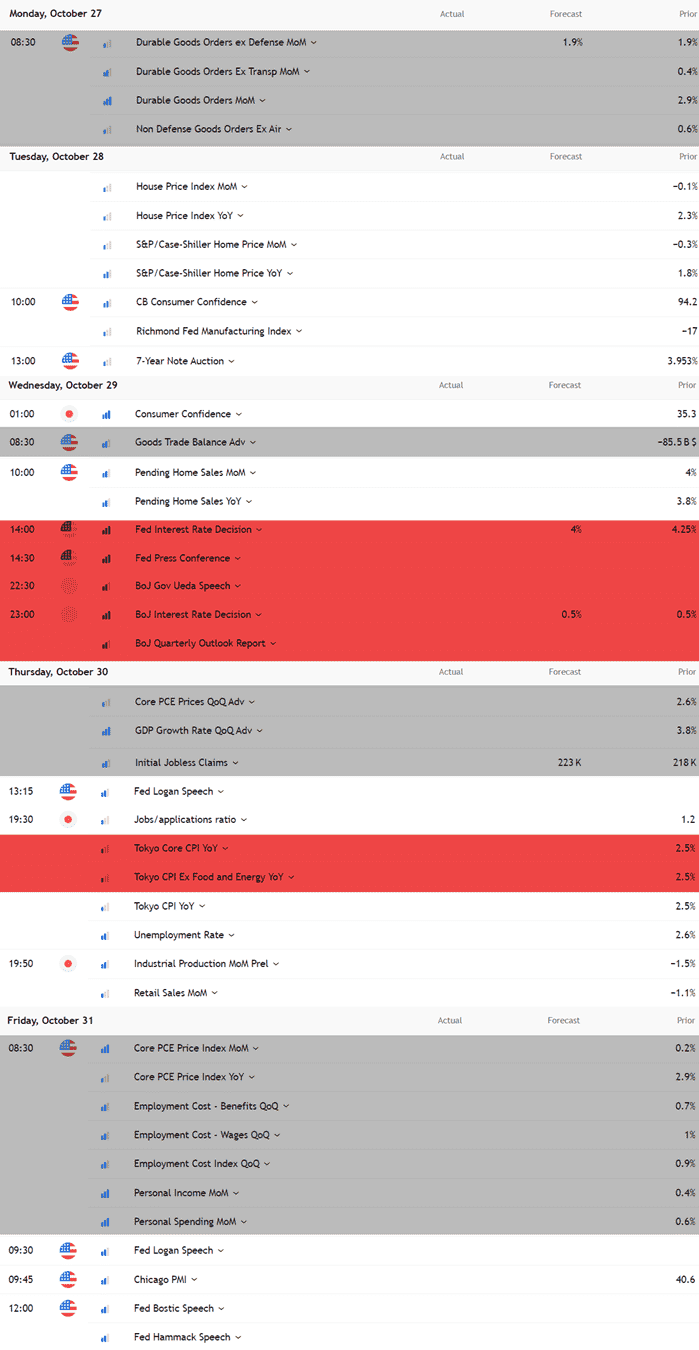
A big influence on nominal growth expectations is the interest rate outlook in both nations, adding extra importance to monetary policy decisions from the Federal Reserve and Bank of Japan over the coming days. The key economic events in the week are shown in the calendar below, with red shading indicative of those most likely to generate volatility in USD/JPY. Times are shown for the East Coast of the United States. Wednesday looms as the most important day with the Federal Reserve decision followed hours later by the BoJ.
Source: TradingView
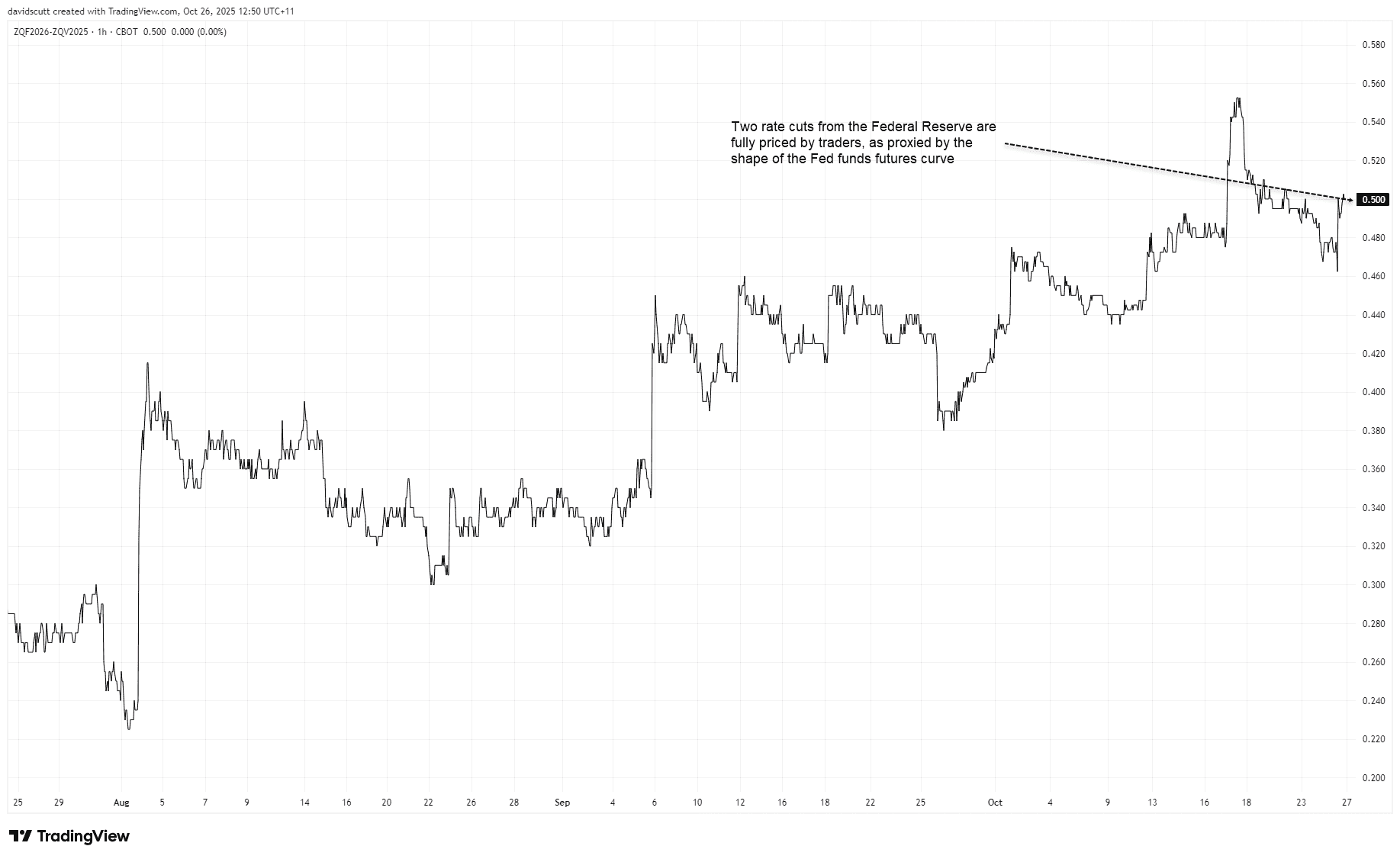
When it comes to the Federal Reserve, this meeting will not contain any new forecasts, meaning the wording of the policy statement, FOMC voting split and chair Jerome Powell’s press conference will be the key things to watch should it cut rates by 25bps to a range of 3.75–4% as is fully priced by markets. Six weeks ago, the FOMC statement said that job gains had “slowed” and suggested that downside risks to employment had “risen.” On inflation, it noted that it had moved up and remained “somewhat elevated.” With so little data received due to the government lockdown, common sense suggests there may not be any changes to those assessments, although there is a risk the language on inflation may shift slightly more dovish given the soft September inflation report released last Friday.
Within the statement, there is also a chance the Fed will announce an end to its quantitative tightening program, although on the balance of probabilities it is more likely to come in December. What’s important to note with Fed balance sheet adjustments is that an end to asset runoffs is entirely expected, with the only question being timing and what mix the bank will feel comfortable with when it comes to asset composition. If an end to QT is announced, look for the dollar to soften marginally.
Source: TradingView
On voting patterns, it is almost certain Stephen Miran will dissent in favour of a 50 basis point cut. It is very unlikely others will join him, mirroring what was seen in September, but if they did it would send a powerful dovish signal and likely weaken the dollar. A dissent in favour of keeping the funds rate steady is another possibility, although the risk may be low in light of the latest inflation data.
That just leaves Jerome Powell’s press conference to navigate. In limited remarks seen since the last press conference, he has come across as dovish and suggested that little has changed since the Fed’s September meeting. It is likely that will be repeated. Hopefully one of the journalists asks him why his focus has been so concentrated on the slowdown in hiring when it is the unemployment rate that is the actual Fed mandate. It is curious why he is suddenly fixated on payrolls growth given we know the series has not been reliable for years and has likely been influenced by changes to immigration policy from the Trump administration.
In regard to the BoJ rate decision, with so little risk of a hike priced for this meeting, it will be left to the vote split and Governor Ueda's press conference to dictate USD/JPY direction in the absence of a shock rate hike. Six weeks ago, two board members voted in favour of a 25bps hike. Any increase in that number would increase the risk of a move from the bank in December when fresh forecasts will also be released and would likely strengthen the yen. However, if we were to see one of those members shift to keeping policy unchanged, it would likely see the yen slide in response.
Turning to Ueda's press conference, he has typically sounded dovish post decisions in the recent past, and with some signs of moderating inflation, that is unlikely to change on this occasion.

Tokyo Inflation make-or-break for December BoJ hike
When it comes to economic data for traders to consider, the risk events come entirely from the Japanese side of the calendar given the ongoing U.S. government shutdown. The events marked in grey are those that are unlikely to be released, many of which would be major market movers. That leaves the Tokyo inflation report as the key piece of information, especially as this typically leads movements in the nationwide report released three weeks later. A hot figure would likely rekindle flagging rate hike pricing in December and strengthen the yen, with another soft report set to do the opposite.
On the fiscal side of the equation, look for any updates on what the new Japanese government plans to do with debt issuance as it prepares a supplementary budget expected before the end of the year. If issuance is increased with no obvious sustained growth dividend, it would likely weaken the yen.
Tech Earnings, Trump-Xi Meeting Add to Event Risk
Source: TradingView
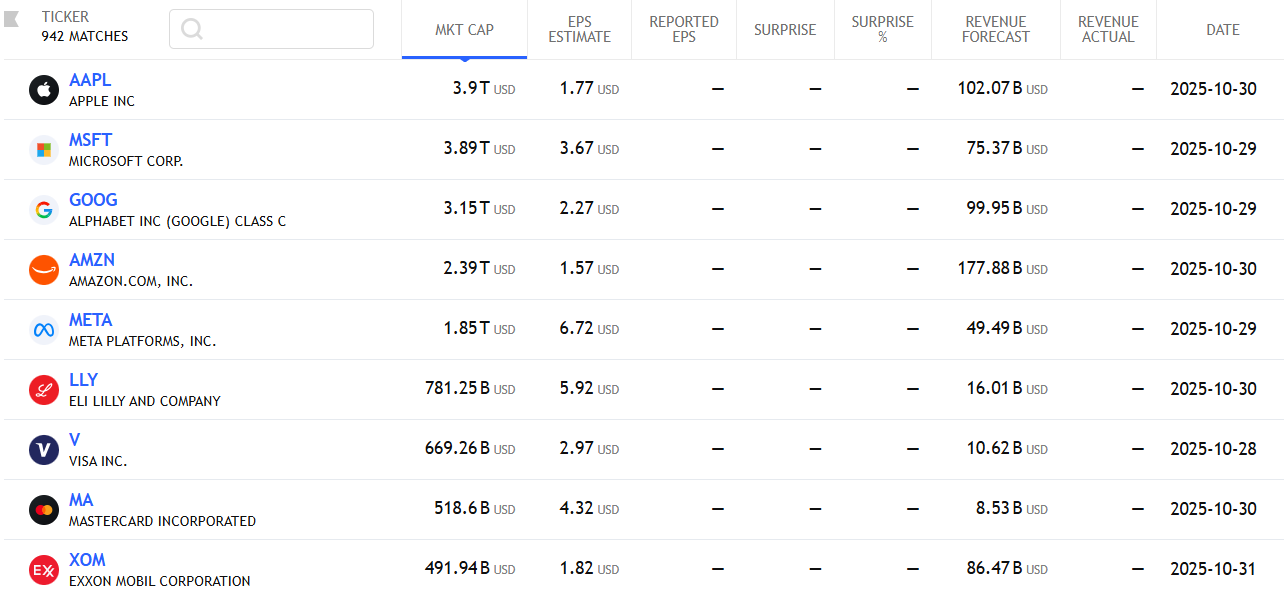
Given the yen’s historic function as a funding currency for carry trades, the arrival of big tech earnings in the United States also creates significant event risk, especially if we were to see a series of underwhelming reports and outlooks from the likes of Apple, Microsoft, Alphabet, Meta and Amazon. If they breeze past expectations, it is unlikely to pressure carry trades and may see additional positions put on, which would normally place upside pressure on USD/JPY. But if the tech titans were to whiff, it would create the risk of carry trade unwinds if it sparks meaningful downside in stocks, an outcome that would see the yen strengthen.
Thursday’s meeting between Donald Trump–Xi Jinping meeting is another key risk event to navigate, but history suggest it will conclude with a short-term deal that kicks the can down the road when it comes to tougher discussions. If correct, risk appetite should improve and keep USD/JPY biased higher. If the meeting concludes without a positive outcome, the yen is likely to appreciate sharply.
USD/JPY Directional Risks Skewed Higher
Source: TradingView
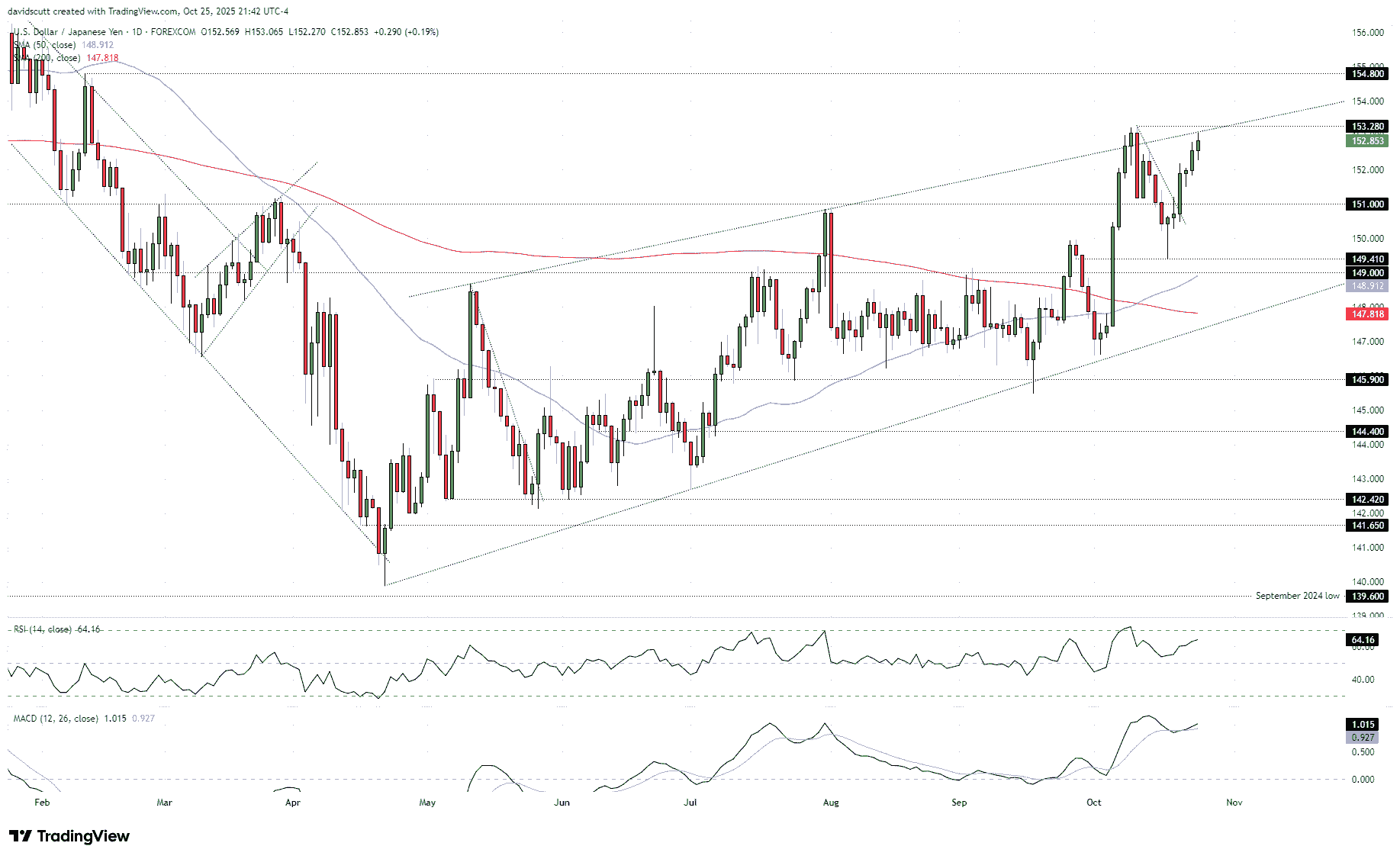
As we approach the new week, USD/JPY finds itself trading near the highest level since the early parts of the year, sitting less than 50 pips away from the peak struck earlier this month. 153.28 is the first topside level of note, with a break there opening the door for a potential retest of the February 12 swing high of 154.80. While the price action has been entirely bullish over the past week, the pair struggled above uptrend resistance earlier this month and stalled again there on Friday, ensuring near term price action should be eyed closely for potential longer-term directional clues.
On the downside, the price did a little bit of work either side of 151.50 last week, putting it on the radar, although there’s little meaningful support until 151.00. Below, 149.41 is a minor level with 149.00 a far more significant support located above significant levels like the 50 and 200-day moving averages and uptrend support running from the April lows.
Like the price action, the message from RSI (14) is entirely bullish, trending higher above 50 but not yet overbought. MACD has confirmed, crossing the signal line from below while in positive territory. Therefore, the directional bias is skewed firmly higher, favouring buying dips and bullish breakouts.