

In recent sessions, NZD/USD has posted an average variation of just under 0.4%, a relatively low level compared to moves above 1% seen in early February. This reflects the emergence of a consistent neutral bias in the pair’s short-term behavior.
Part of this indecision stems from the upcoming decision by the Reserve Bank of New Zealand (RBNZ), which could provide clearer signals regarding the direction of monetary policy for the remainder of 2026. Should the central bank adopt a more aggressive stance than expected, it could reignite the buying pressure observed in previous weeks and regain relevance in upcoming NZD/USD price action.

What to Expect from the RBNZ?
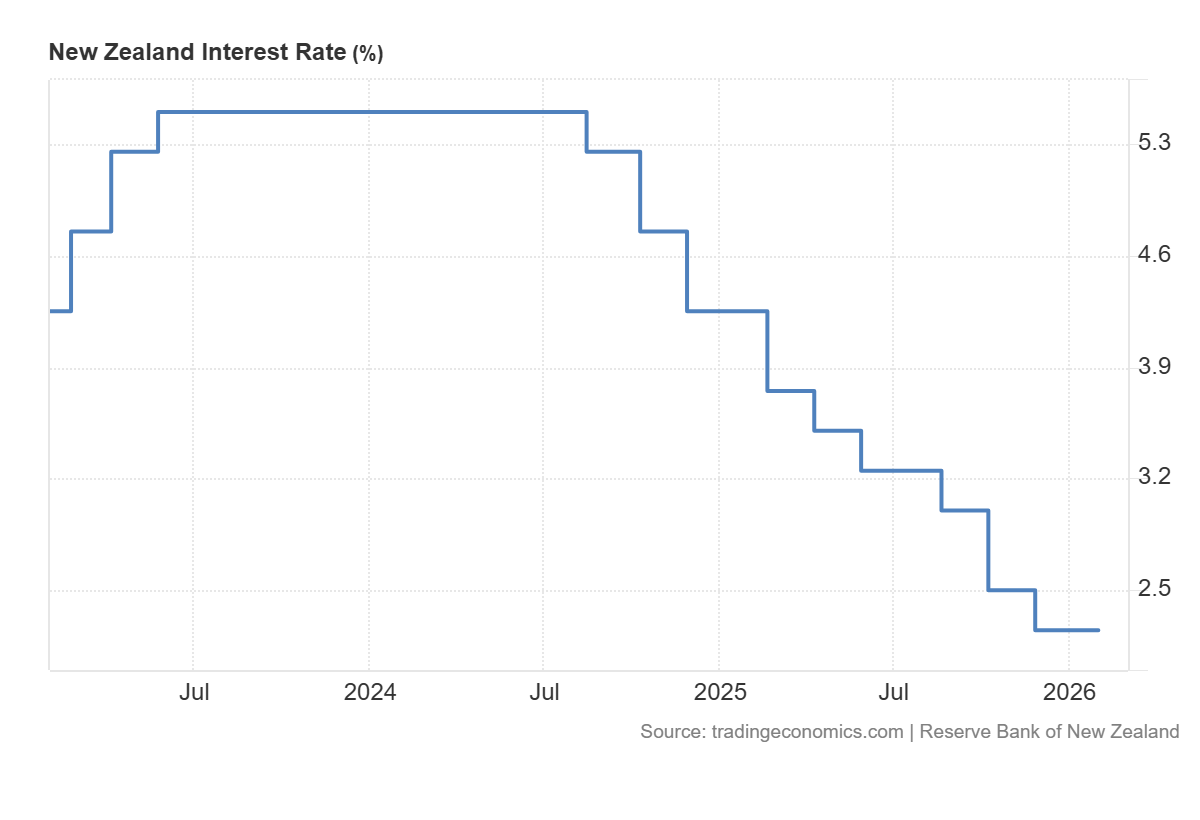
The RBNZ’s policy decision is scheduled for February 17, and for now, forecasts point to interest rates remaining unchanged at 2.25%, a level the institution has maintained since late 2025.
This neutral rate stance follows a series of cuts that began in June 2024, after which the bank signaled that the 2.25% level represents a stable reference point for the New Zealand economy in the medium term.
Source: TradingEconomics
It is important to note that the RBNZ is considered one of the more hawkish central banks within the G10, particularly when it comes to inflation control. In previous meetings, the bank emphasized that although inflation is not excessive, it remains outside the preferred 1%–3% target range, suggesting that rates may need to stay at restrictive levels for a prolonged period.
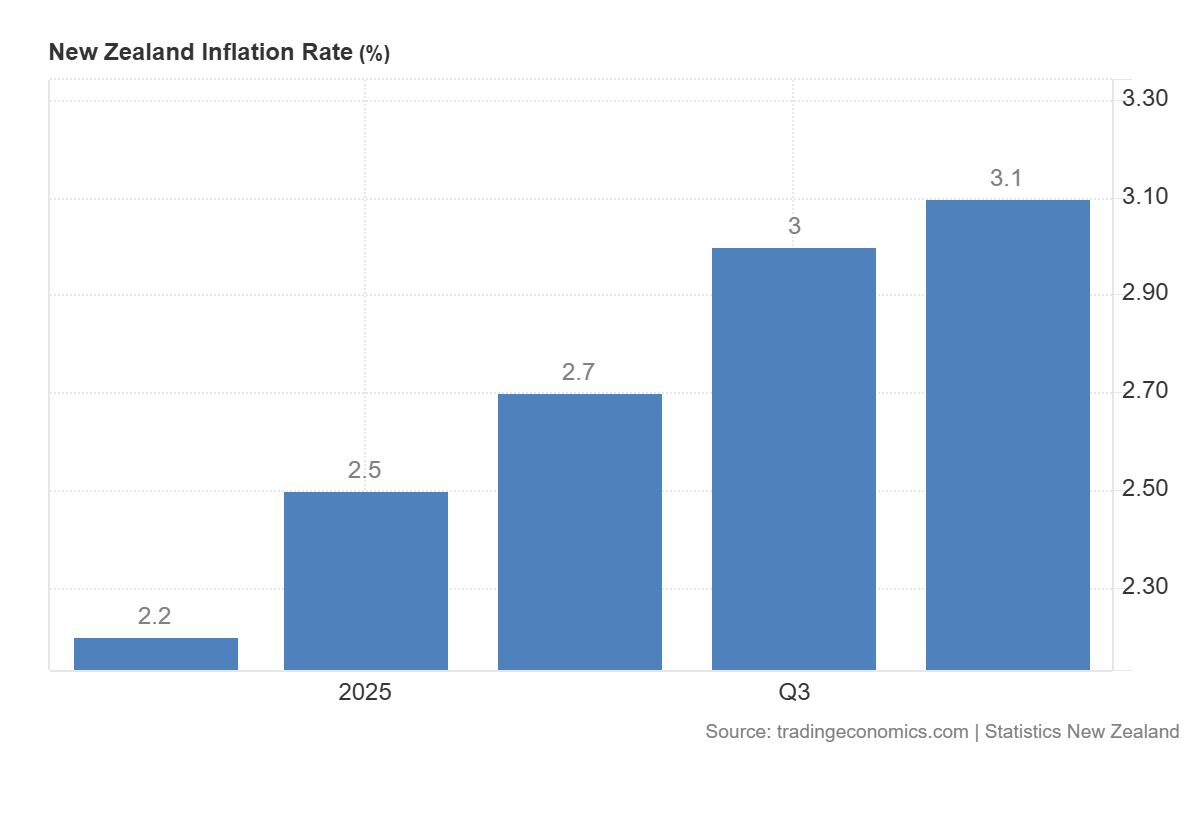
Looking at the latest inflation data for New Zealand, inflation stood within target at 2.5% at the beginning of 2025 but rose to 3.1% in the most recently reported quarter, slightly exceeding the upper bound of the target range. Moreover, inflation has shown a consistent upward trend over the past year, without clear signs of sustained moderation.
Source: TradingEconomics
Against this backdrop, recent inflation dynamics may become a key factor in tomorrow’s decision. Rather than an immediate rate hike, markets will likely focus on the tone of the statement. If the RBNZ stresses the importance of controlling inflation and signals readiness to act more decisively in the future, this could be interpreted as supportive for New Zealand dollar-denominated assets. In turn, this may help sustain NZD demand in the short term and reinforce buying pressure in NZD/USD.
The U.S. Dollar Remains Indecisive
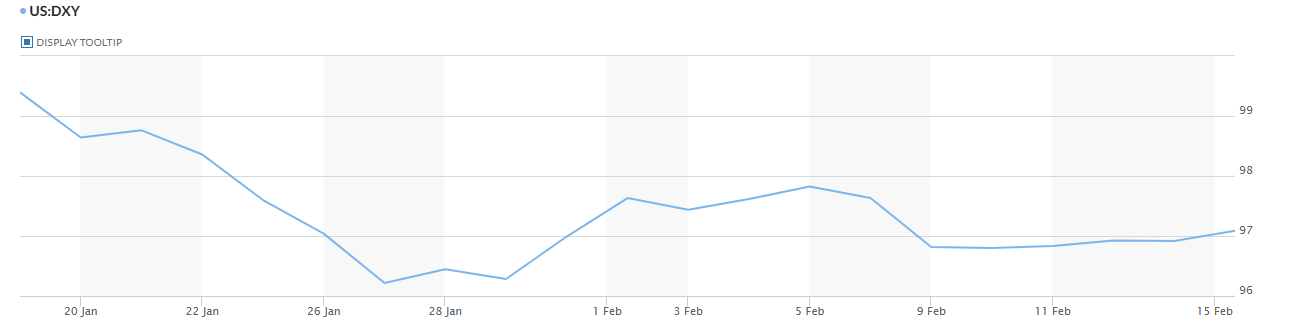
Beyond the RBNZ event, the counter-currency—the U.S. dollar—continues to face a period of indecision and consistent weakness. Recent movements in the DXY index, which measures the dollar’s strength against major peers, show a decline toward the 97-point area, moving away from the psychological 100 level.
This weakness may be linked to expectations surrounding the Federal Reserve’s next steps, particularly following last week’s U.S. employment and inflation releases.
Source: MarketWatch
If this indecision and softness persist, the weaker dollar environment could allow currencies such as the New Zealand dollar to recover further. A prolonged decline in dollar strength could therefore support more consistent buying pressure in NZD/USD over the coming sessions.
NZD/USD Technical Outlook
Source: StoneX, Tradingview
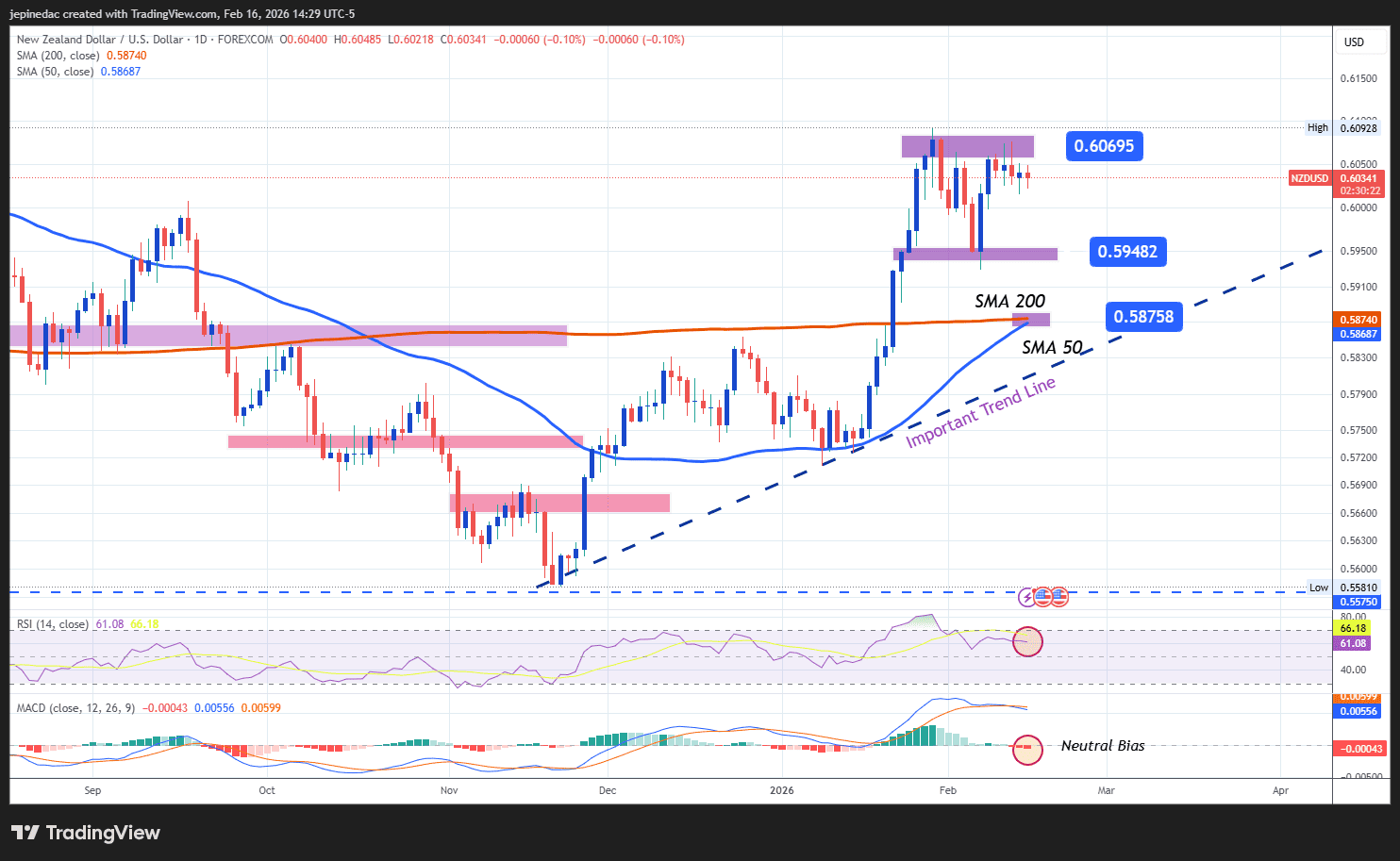
- The Uptrend Remains Relevant: Since November 2025, NZD/USD has maintained a well-defined upward trendline. Currently, the 50-period moving average is preparing to cross above the 200-period moving average on the daily chart, potentially forming a golden cross, which would reinforce the prevailing bullish bias in the longer term.However, after several weeks of sustained gains, the recent neutral environment could give way to short-term corrective pullbacks. For now, these retracements do not appear sufficient to break the prevailing bullish structure.
- RSI: The RSI remains above the neutral 50 level, indicating that average momentum over the past 14 sessions continues to favor buyers. Nevertheless, a slight flattening in the indicator’s slope suggests that bullish pressure has begun to lose momentum. Without stronger moves, indecision may continue shaping near-term price action.
- MACD: A similar scenario is visible in the MACD, where the histogram is hovering around the zero line, signaling a lack of clear dominance in short-term moving average momentum. This behavior may reflect caution ahead of the central bank decision. If the histogram fails to move decisively away from neutral territory, a more pronounced indecision phase could develop in the short term.
Key Levels:
- 0.60695 – Key resistance: This level corresponds to the 2026 highs. Sustained buying pressure above this area could point to a more aggressive bullish move and extend the prevailing uptrend.
- 0.59482 – Near-term barrier: A recent support zone that may act as a reference level in the event of deeper corrective pullbacks.
- 0.58758 – Major support: Aligned with the 50- and 200-period moving averages on the daily chart, this level represents the most relevant downside barrier. A break below this area would put the current uptrend at risk and could open the door to a more consistent short-term bearish bias.
Written by Julian Pineda, CFA, CMT – Market Analyst
Follow him on: @julianpineda25