


USD/CAD Outlook: The Canadian Dollar Weakens Ahead of NFP
During the current session, USD/CAD has posted a gain of around 0.38%, favoring the US dollar. The buying pressure is mainly driven by expectations surrounding tomorrow’s NFP release, as well as ongoing dynamics supporting the dollar amid persistent geopolitical tensions.
Share this:

During the current session, USD/CAD has posted a gain of around 0.38%, favoring the US dollar. The buying pressure is mainly driven by expectations surrounding tomorrow’s NFP release, as well as ongoing dynamics supporting the dollar amid persistent geopolitical tensions.
As updates on both events unfold, appetite for the US dollar could increase further, potentially sustaining buying pressure in USD/CAD in the short term.


NFP Day Approaches
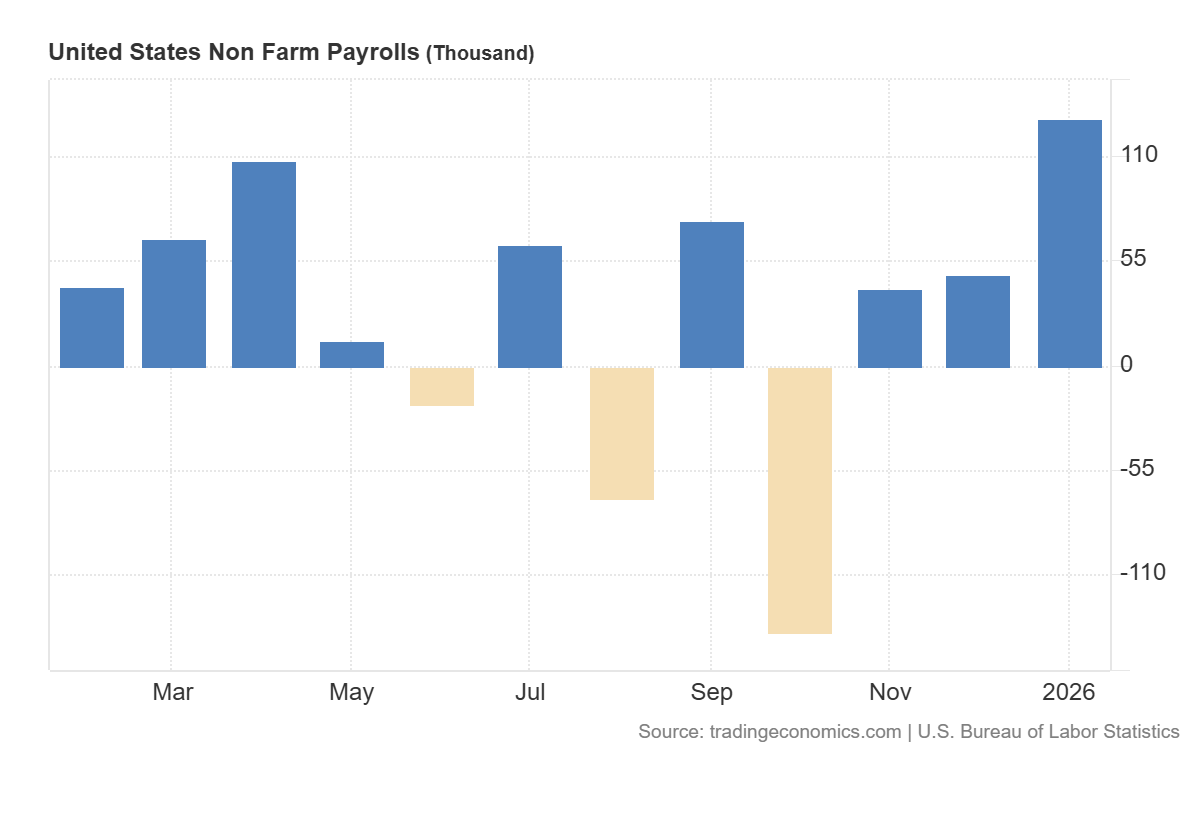
Tomorrow’s session will bring the release of the most relevant employment data of the month in the United States: the Non-Farm Payrolls (NFP). Current forecasts point to the creation of 59,000 new jobs in February, a lower figure compared to the 130,000 jobs reported in the previous release for January.
Overall, the market expects employment growth to continue, though at a more moderate pace in the short term. The broader trend still suggests a gradual recovery in the US labor market, which began to show improvement in November with 41,000 new jobs and peaked in January. This indicates that employment dynamics have been steadily recovering in recent months.
Source: TradingEconomics
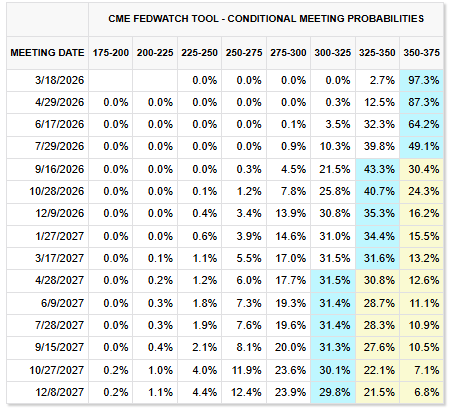
The NFP data are critical for short-term Federal Reserve policy expectations. Current probability tables show that for the March, April, and June meetings, there is a probability above 60% that interest rates will remain at the current 3.75% reference level. Even for the July meeting, there is a 49.1% probability that rates will remain unchanged.
Therefore, the Fed is expected to maintain a neutral but firm monetary stance in the coming months. In this context, strong employment data could reinforce a more restrictive posture by the Federal Reserve and potentially delay any rate-cut scenario until after the second half of 2026.
Source: CMEGROUP
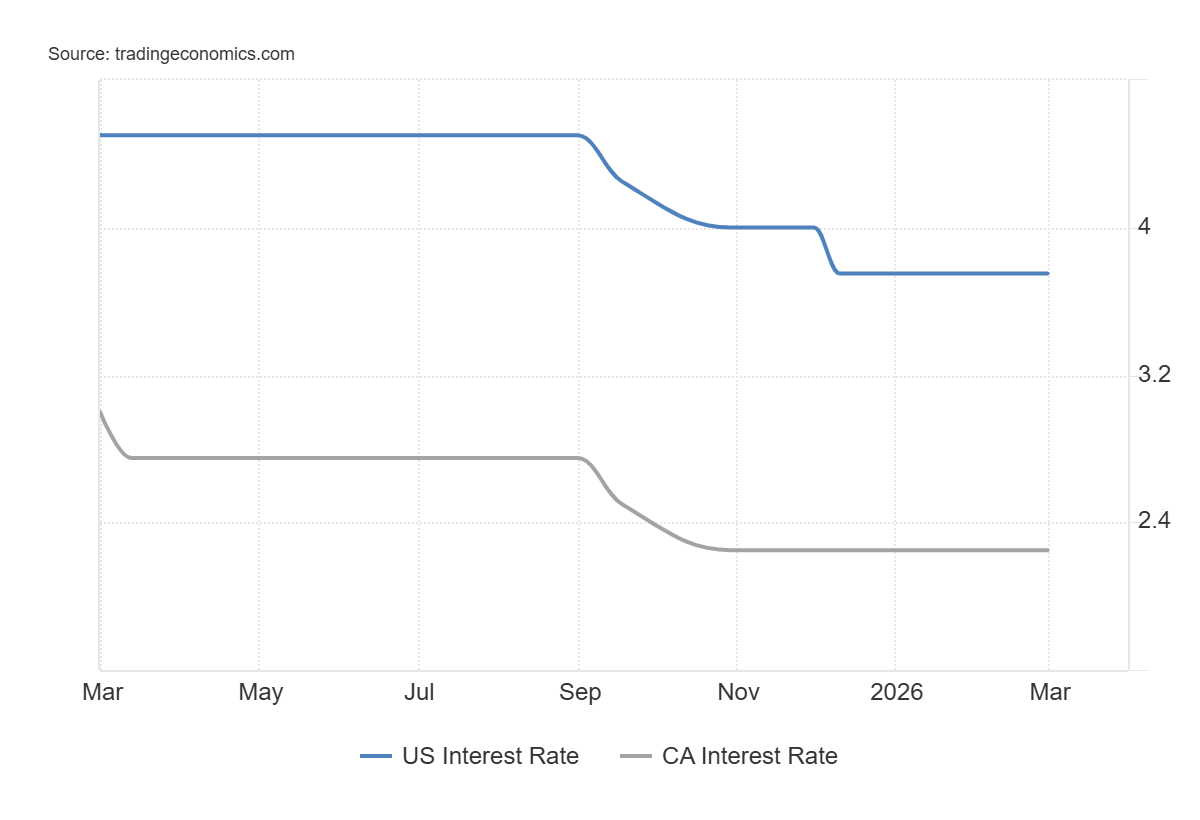
This dynamic is particularly relevant for the interest rate differential between the United States and Canada. The US benchmark rate stands at 3.75%, while Canada’s rate remains at 2.25%. If US monetary policy remains unchanged in the short term, this differential could continue influencing both currencies, increasing the relative attractiveness of US dollar-denominated investments compared to Canadian dollar assets, especially given the continued appeal of the US fixed-income market.
Source: TradingEconomics
Taking all of this into account, part of the recent strength in the US dollar can be attributed to the Federal Reserve’s firm neutral stance. If employment data reinforce this outlook, the Canadian dollar could lose ground more consistently, acting as a catalyst for potential stronger buying pressure in USD/CAD in the short term.
Do Tensions Benefit the USD?
Several sessions have passed since the start of military attacks in the Middle East, and no clear resolution has been reached. As a result, the geopolitical risk premium and overall market uncertainty remain present.
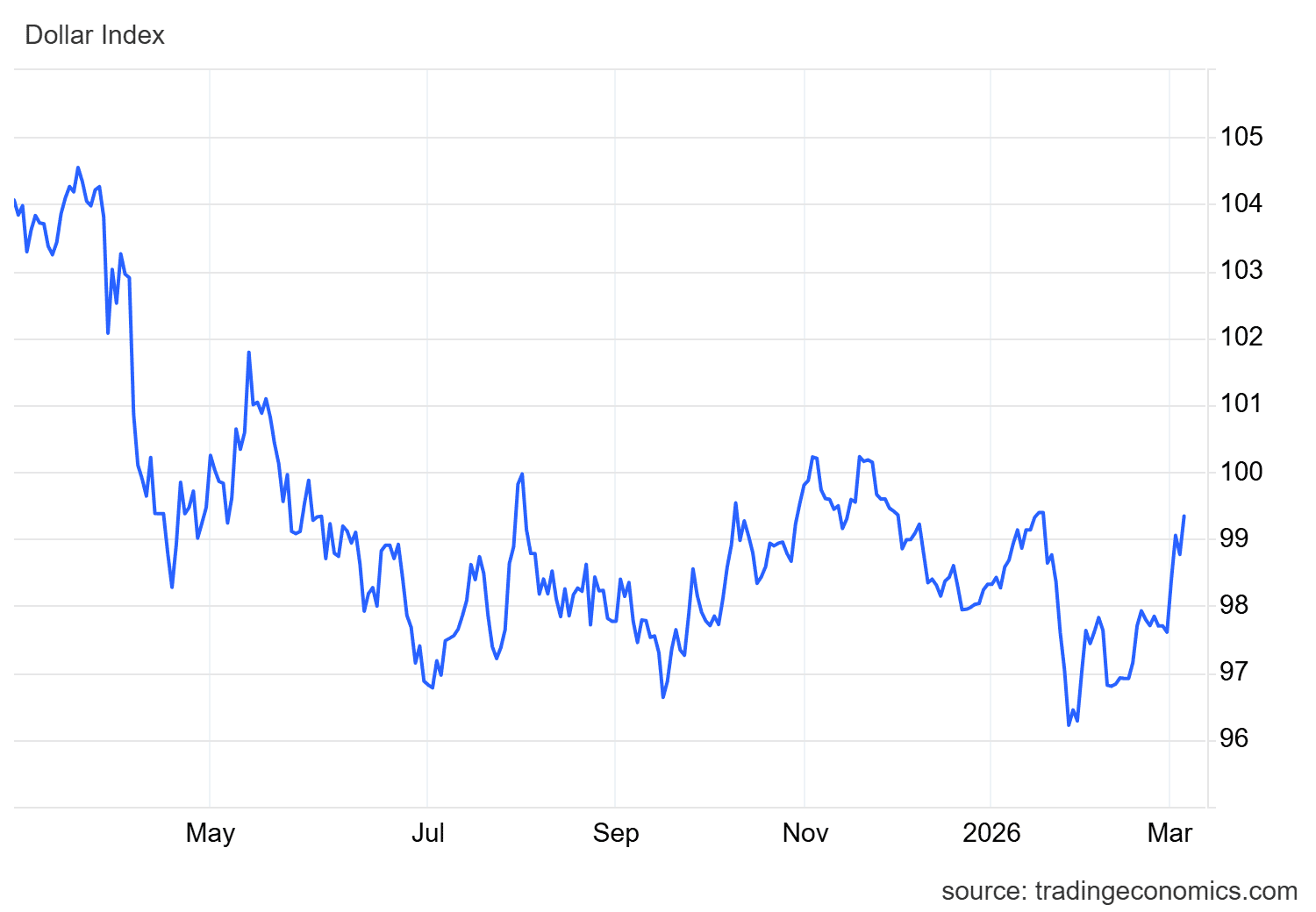
In this environment, the US dollar has taken on a more prominent role in the short term. As uncertainty increases, demand for the currency has shown consistent recovery. This is reflected in the DXY index, which has advanced toward the 99-point area since tensions began, moving closer once again to the key psychological 100 level, highlighting a notable rebound in dollar strength.
Source: TradingEconomics
If demand for dollars remains firm, the Canadian dollar could continue to weaken in the short term, supporting sustained buying pressure in USD/CAD in the coming sessions.
Technical Outlook for USD/CAD
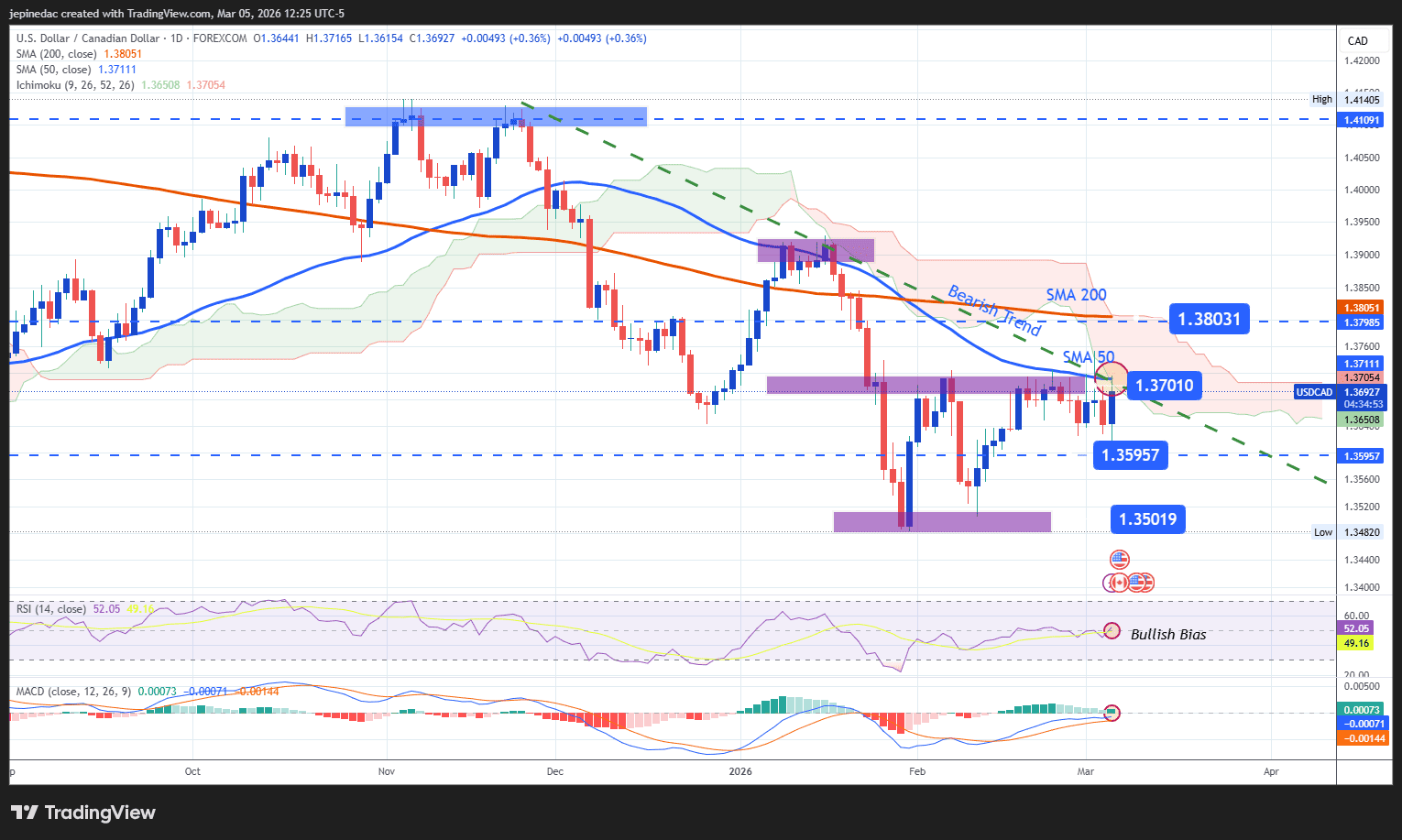
Source: StoneX, Tradingview
- Long-Term Trendline Enters Risk Zone: Since late November 2025, USD/CAD has maintained consistent bearish swings that formed a descending trendline on the daily chart. However, recent buying momentum has begun to threaten this bearish structure. If buying pressure continues to build, the pattern could be invalidated, potentially signaling a structural shift in the chart over the coming sessions.
- RSI: At present, the RSI shows a consistent positive slope and remains above the neutral 50 level. This suggests that average momentum over the last 14 sessions has shifted toward a meaningful buying impulse that could strengthen further if this dynamic persists.
- MACD: A similar scenario is visible in the MACD, whose histogram remains above the zero line. This indicates that short-term moving average momentum is beginning to tilt bullish, reinforcing the potential for more sustained buying pressure in the near term.
Key Levels:
- 1.38031 – Key resistance: Level aligned with the 200-period moving average on the chart. Sustained moves above this zone could confirm a more solid structural shift and open the door to a new bullish trend in the coming weeks.
- 1.37010 – Critical barrier: Area where the descending trendline converges with the 50-period simple moving average. A break above this level could invalidate the previous bearish structure and consolidate a dominant buying bias.
- 1.35957 – Crucial support: Level corresponding to a recent neutrality zone and the main downside barrier to monitor. Moves back below this area could reactivate a bearish bias and restore the prior downtrend structure.
Written by Julian Pineda, CFA, CMT – Market Analyst
Follow him on: @julianpineda25

The complete CFD trading experience
Award-winning platforms, competitive spreads, low commissions and dedicated support.
We live and breathe the markets and are dedicated to helping traders realise their ambitions as we continue to set the industry bar.
Economic calendar
Web Trader platform
Our sophisticated web-based platform is packed with features.
Related articles

USD/JPY weekly outlook: Quarter turn scrambles rates regime
USD/JPY’s tight relationship with front-end US rates broke down sharply last week, but quarter-turn flows and positioning suggest the disconnect may prove temporary.


Gold Update: XAU/USD Remains Under Pressure Even After the NFP Report
As the trading week comes to an end, weakness around gold price action remains evident in the short term. This can be seen in the performance of the past two sessions, where the metal has declined by approximately 0.3%. Although the move has not been particularly aggressive, it highlights that buying pressure continues to struggle to regain control of the market.

USD/CAD forecast: rally could accelerate above June highs at 1.4250
USD/CAD recovered quickly after weaker US jobs data, keeping the bullish trend in focus. A move above the June highs could accelerate the rally as inflation keeps the Fed under pressure.

StoneX Europe Ltd may make third party material available on this website which may contain information included but not limited to the conditions of financial markets. The material is for information purposes only and does not contain, and should not be construed as containing, investment advice and/or investment recommendation and/or an investment research and/or an offer of or solicitation for any transactions in financial instruments; any decision to enter into a specific transaction shall be made by the client following an assessment by him/her of their situation.
StoneX Europe Ltd makes no representation or warranty and assumes no liability as to the accuracy or completeness of the information provided, nor any loss arising from any investment based on a recommendation, forecast or other information supplied. You should always seek independent advice as to your suitability to speculate in any related markets and your ability to assume the associated risks, if you are at all unsure. We are not under any obligation to update any such material. Any opinion made may be personal to the author and may not reflect the opinion of StoneX Europe Ltd.